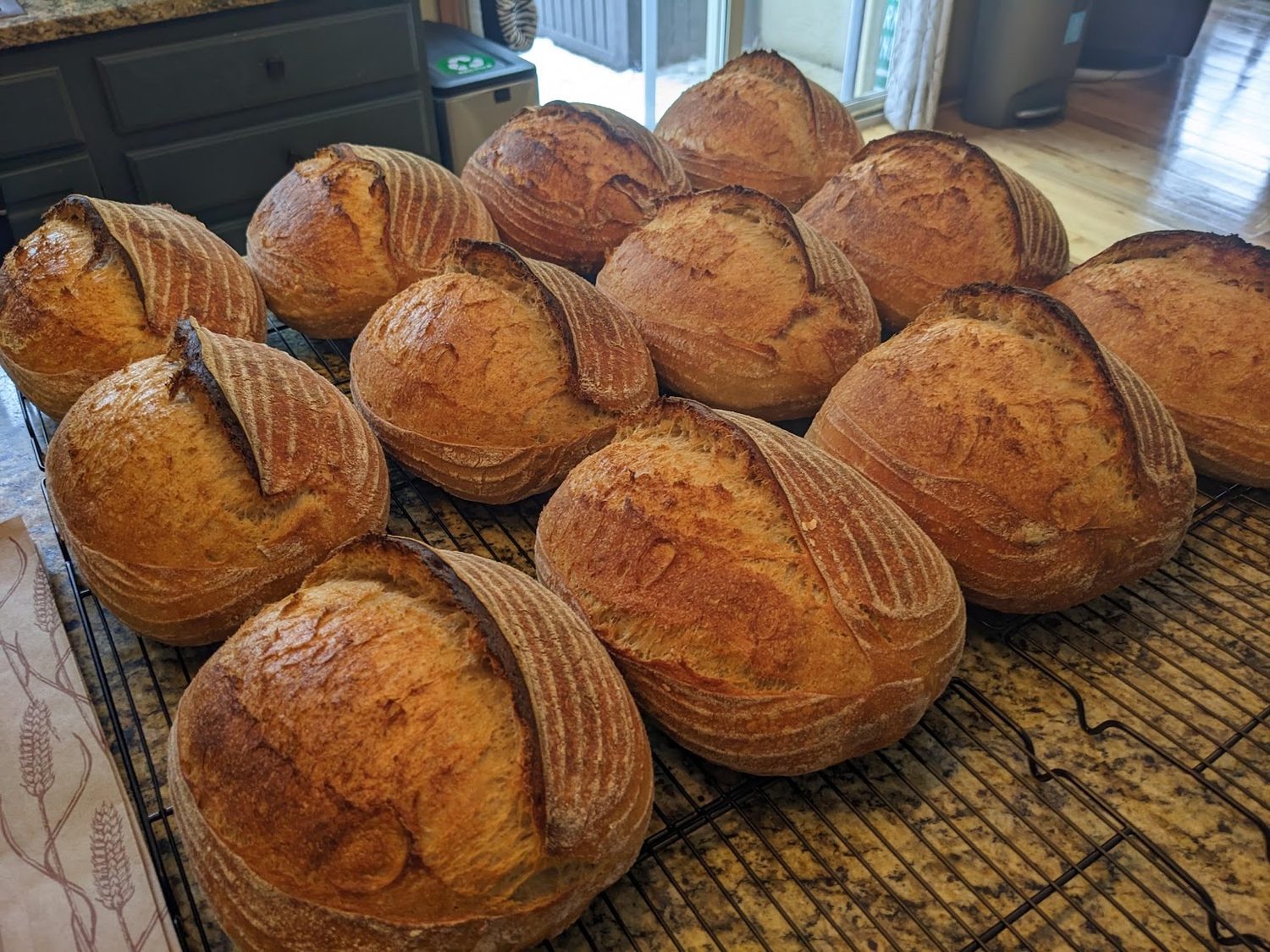
A dozen scored sourdough boules cooling on a wire rack

Powell Artisan Bakery · Powell, Ohio

Bakes

For the past three years I have backed a van up to the Powell Farmers Market through the season and sold bread out of it. This is how that happened, who taught me, what I found out three years in, and why I think it is worth doing the slow way.

Grandpa Wayne

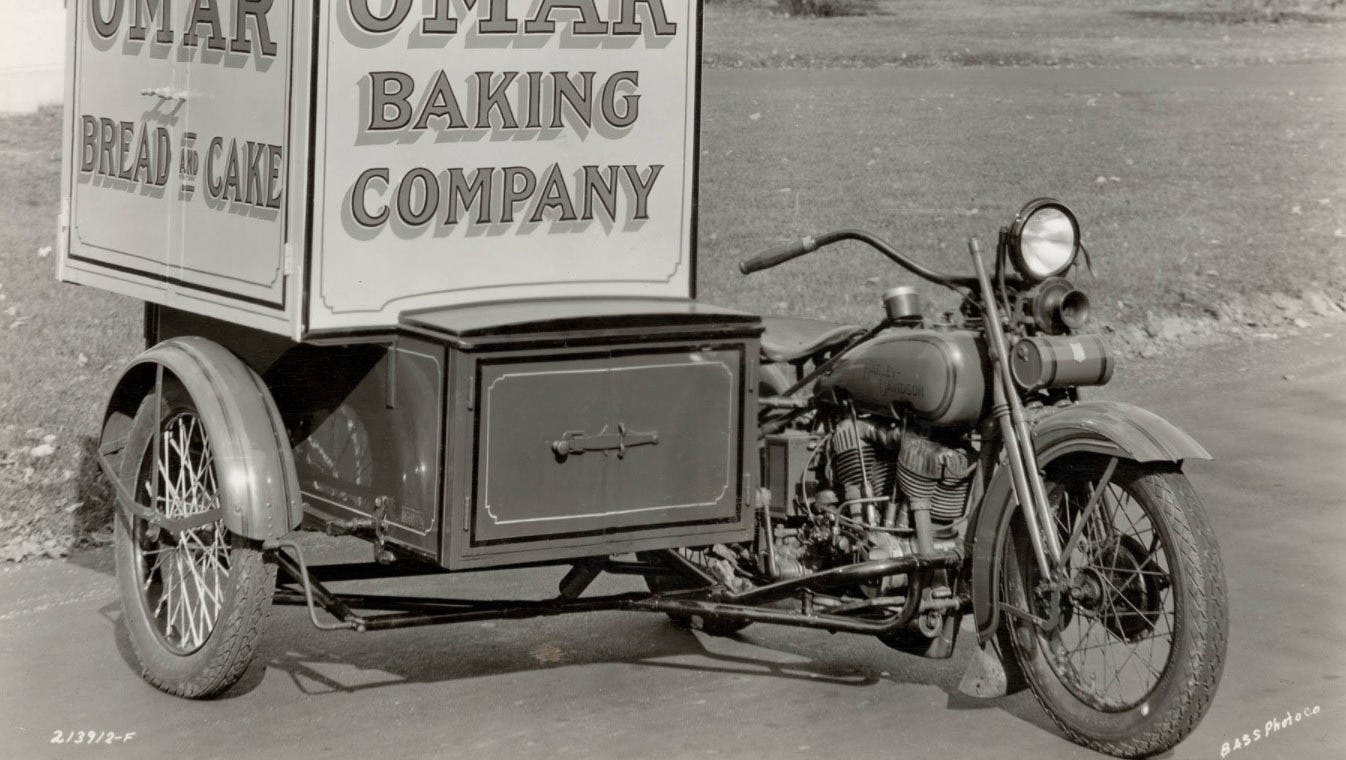
My grandfather was Oscar Wayne Schade, born in White Haven, Pennsylvania in 1934. He was an Air Force radar technician on B-47 bombers, stationed in Arkansas, at Lockbourne here in Ohio, and in Africa. He spent most of the rest of his life as a baker, and part of it as a route salesman for Omar Bakery.

Growing up I knew he had worked at a bakery before he retired. That was about all I knew, and I did not learn the rest of it until long after I had started baking myself.

So I did not follow him into this. I arrived at it on my own, and only afterward found out how much of it he had already done.

Grandpa Wayne, 1934 to 2014.

An archival photograph of a Harley-Davidson delivery trike with a box body lettered Omar Baking Company, Bread and Cake
An Omar Baking Company delivery rig. Not his, but his route. Bass Photo Co.

The van

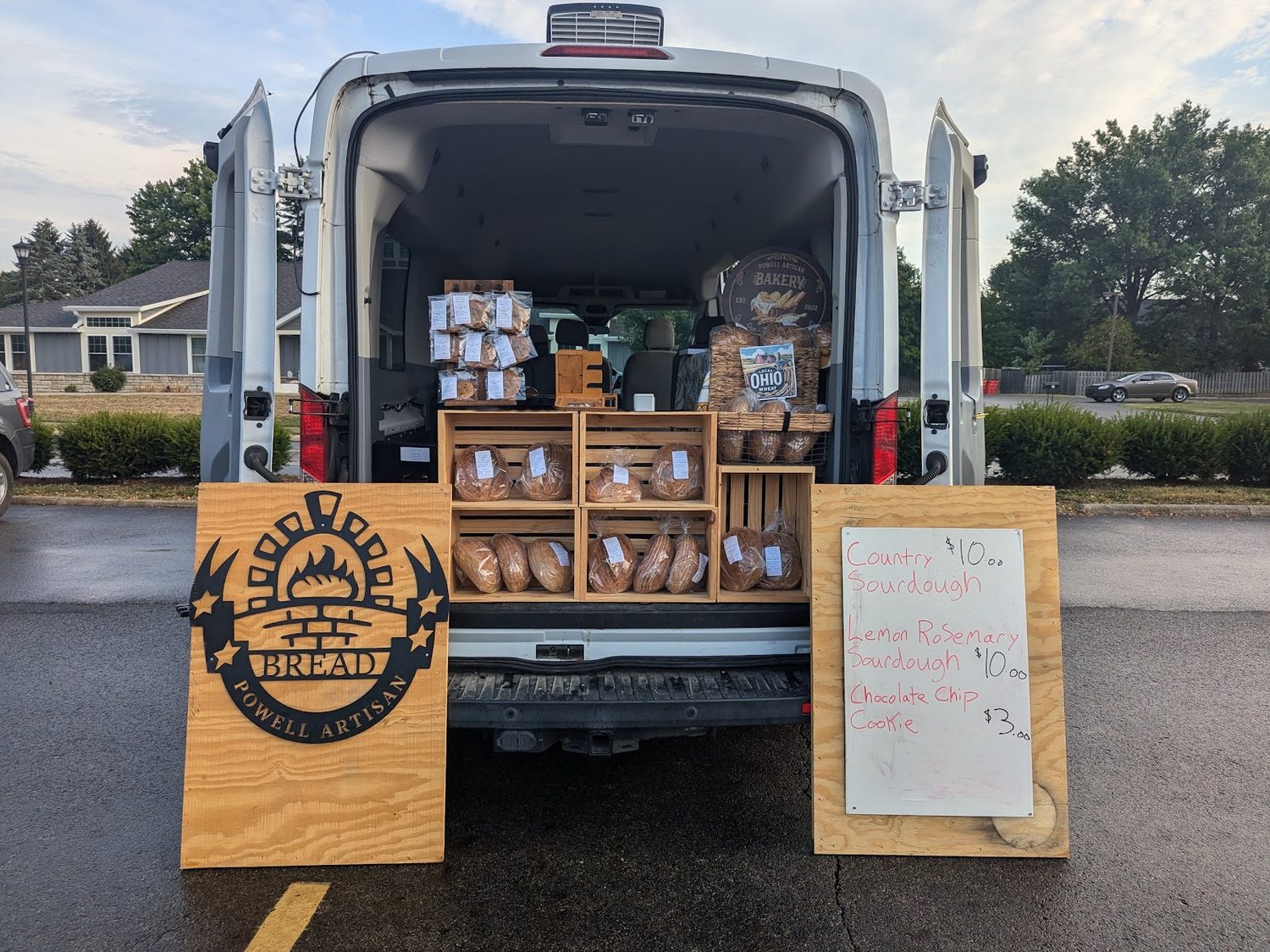
I bought the van in California. We drove it back through Lake Tahoe and Yellowstone when we moved home to Ohio, and it has been the bakery's storefront ever since.

Every bread is ten dollars. The basket at the back says Local Ohio Wheat, which is the part I care about most.

The back of a cargo van set up as a market stall, crates of bagged sourdough, a hand-lettered price board, and a Powell Artisan Bakery sign
Market morning, doors open.

Where it started

I spent about fourteen years at Google, and for two of them I was on the virtual reality team in California. Our building had a test kitchen. Chefs and bakers came through it constantly to cook, demonstrate and talk about what they did.

Three of them rearranged something for me. Josey Baker, who had taught himself and then written the book about it. Tony Gemignani, who has won more world pizza titles than seems reasonable. And Chad Robertson of Tartine, whose country loaf is the reason half the people reading this own a dutch oven.

I went home and started baking. My first real successes came out of Artisan Bread in Five Minutes a Day and the New York Times no-knead method, baked in a cast iron pot on a home oven's best guess at steam.

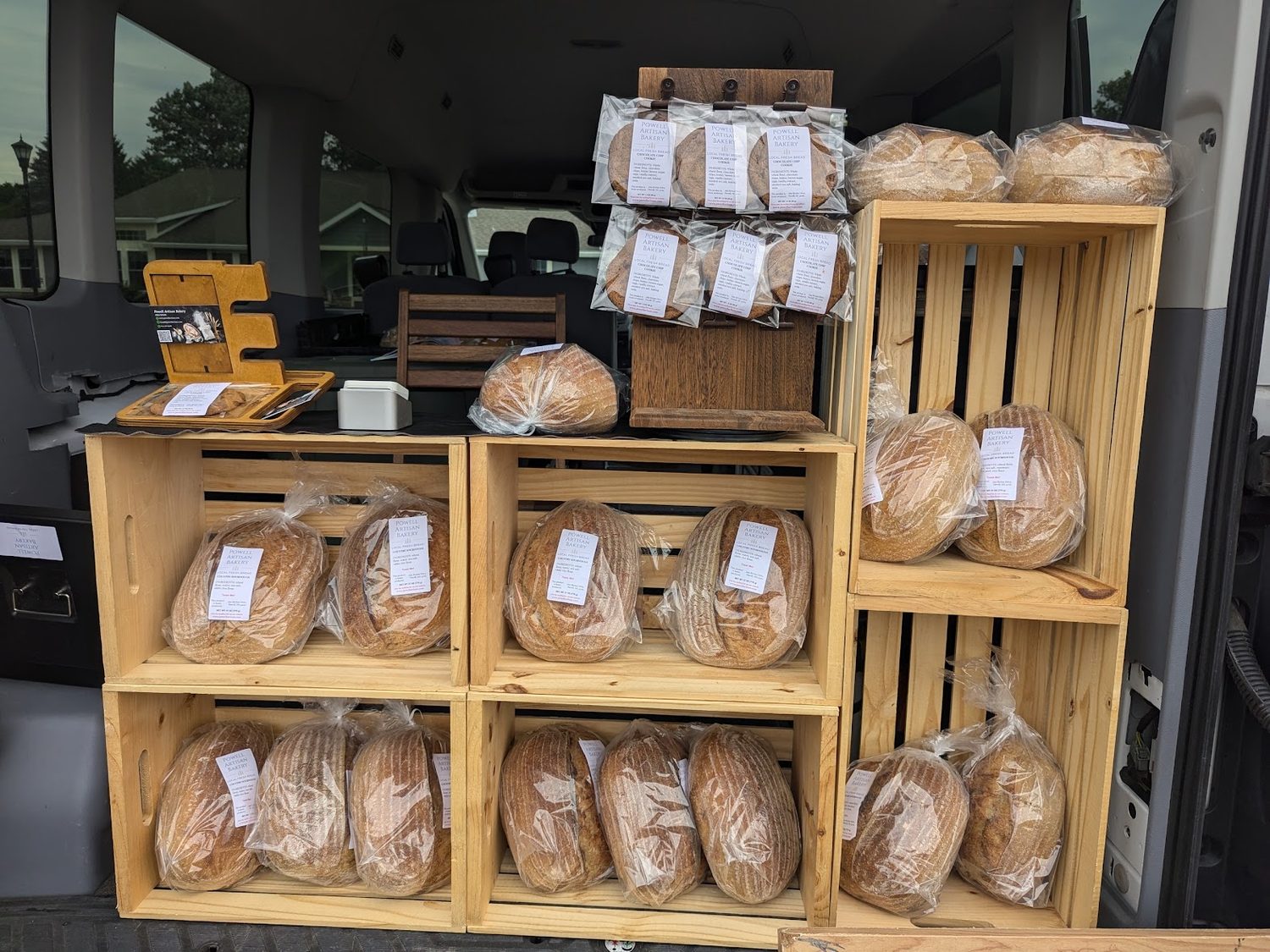
Crates of bagged sourdough loaves and cookies arranged on wooden crates inside the van
Country sourdough, and the cookies.

Learning it properly

My first real lesson was the art of the baguette, with Craig Ponsford at the Artisan Baking Center in Petaluma.

Ponsford won the individual gold at the 1996 Coupe du Monde de la Boulangerie in Paris, the first time an American took a category, and he took it for baguettes. So my introduction to shaping a baguette came from the person who had been judged best in the world at shaping a baguette. I was not particularly good at making baguettes in that class.

After that I went to the artisan bread and pizza convention in Atlantic City, twice, and met Peter Reinhart, whose Bread Baker's Apprentice I had already been working out of at home.

I also came home from that convention with a bag of dried starter. The keynote speaker was the owner of Sourdough Willy's, and he gave me a piece of his culture, dried. They trace it to the Klondike gold rush of 1897, it has been fed continuously at the pizzeria since 1984, and it is catalogued as number 104 in the Quest for Sourdough heritage library in Belgium. Prospectors used to sleep with their starters so the cultures would not freeze, which is how the miners themselves ended up being called sourdoughs.

Every loaf that comes out of that van is raised by a descendant of that culture. I did not make that culture. I only keep it fed.

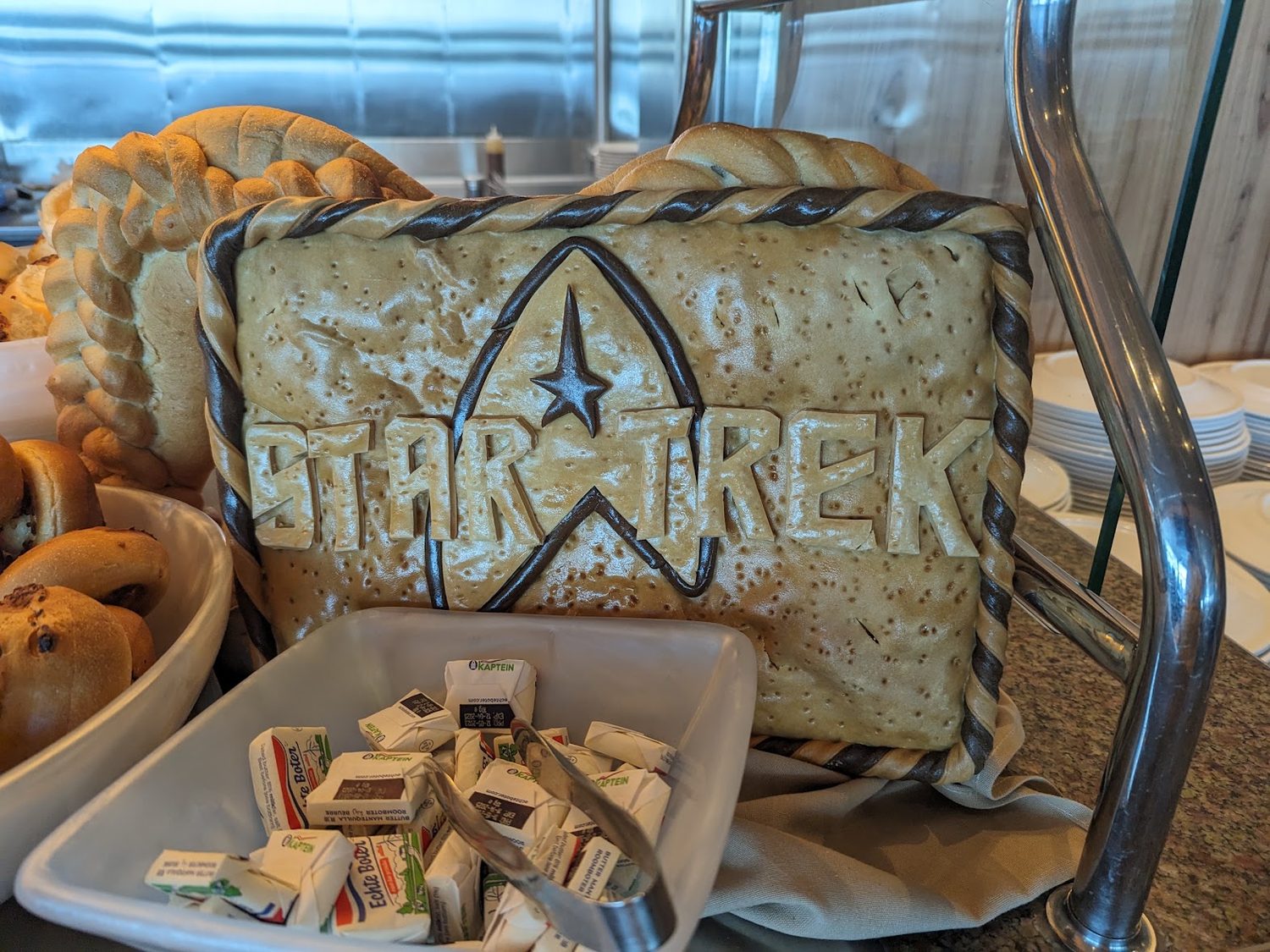
A large bread showpiece sculpted with the Star Trek insignia and lettering, on a buffet
Star Trek Cruise 7, in the Caribbean, with Rachel. I'm not a nerd, you're a nerd.

Camp Bread

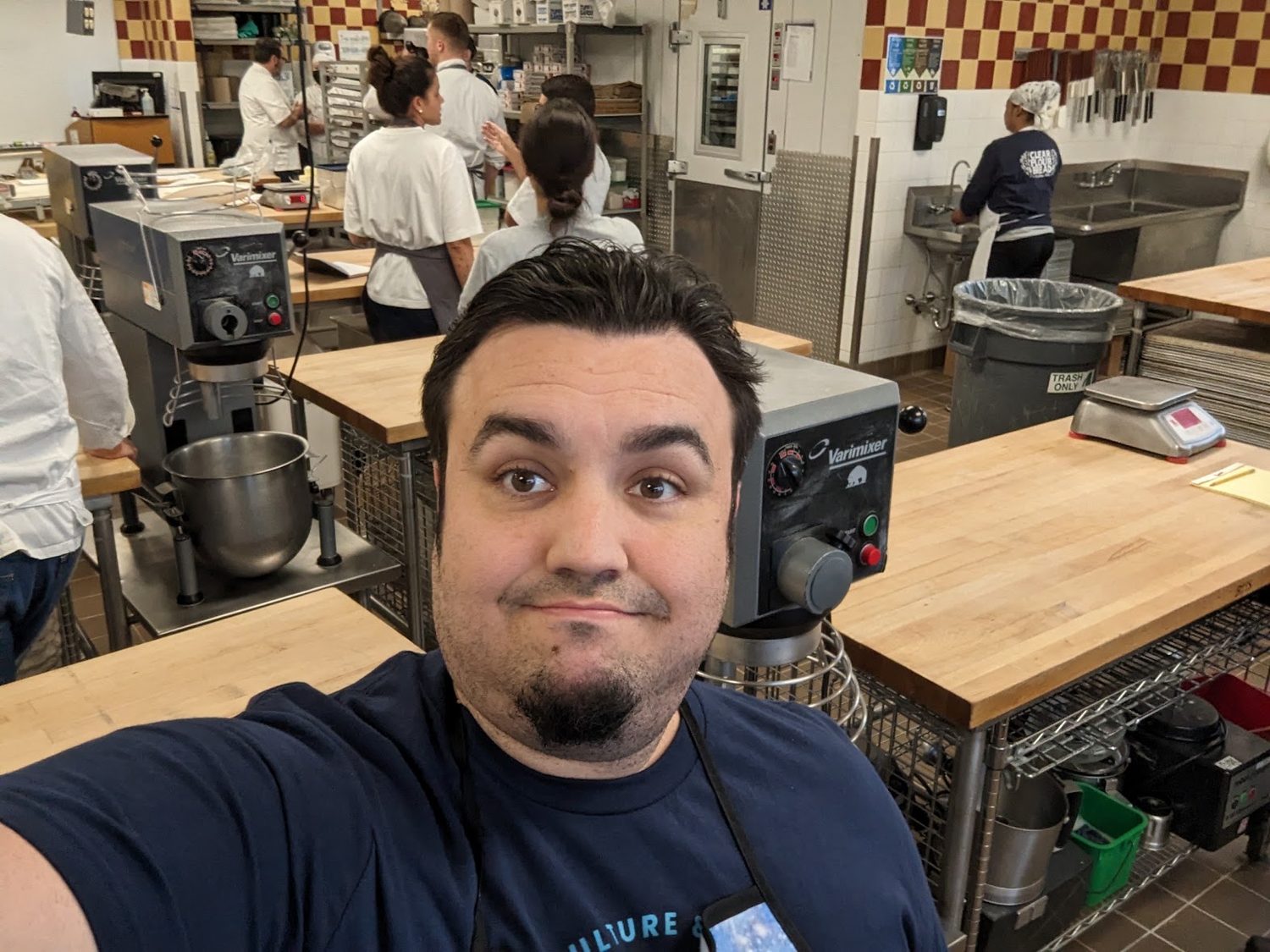
I joined the Bread Bakers Guild of America, and through the Guild I went to Camp Bread in Providence, Rhode Island, in the teaching kitchens at Johnson & Wales.

Bakery owners and head chefs flew in from all over the country to take classes together, talk, and break bread. They came from a wide variety of backgrounds, and they were some of the kindest people I have ever met.

Allen in a busy teaching kitchen at Camp Bread, spiral mixers and bakers at work behind him
Camp Bread, in the teaching kitchens at Johnson & Wales.

The people who made me open a bakery

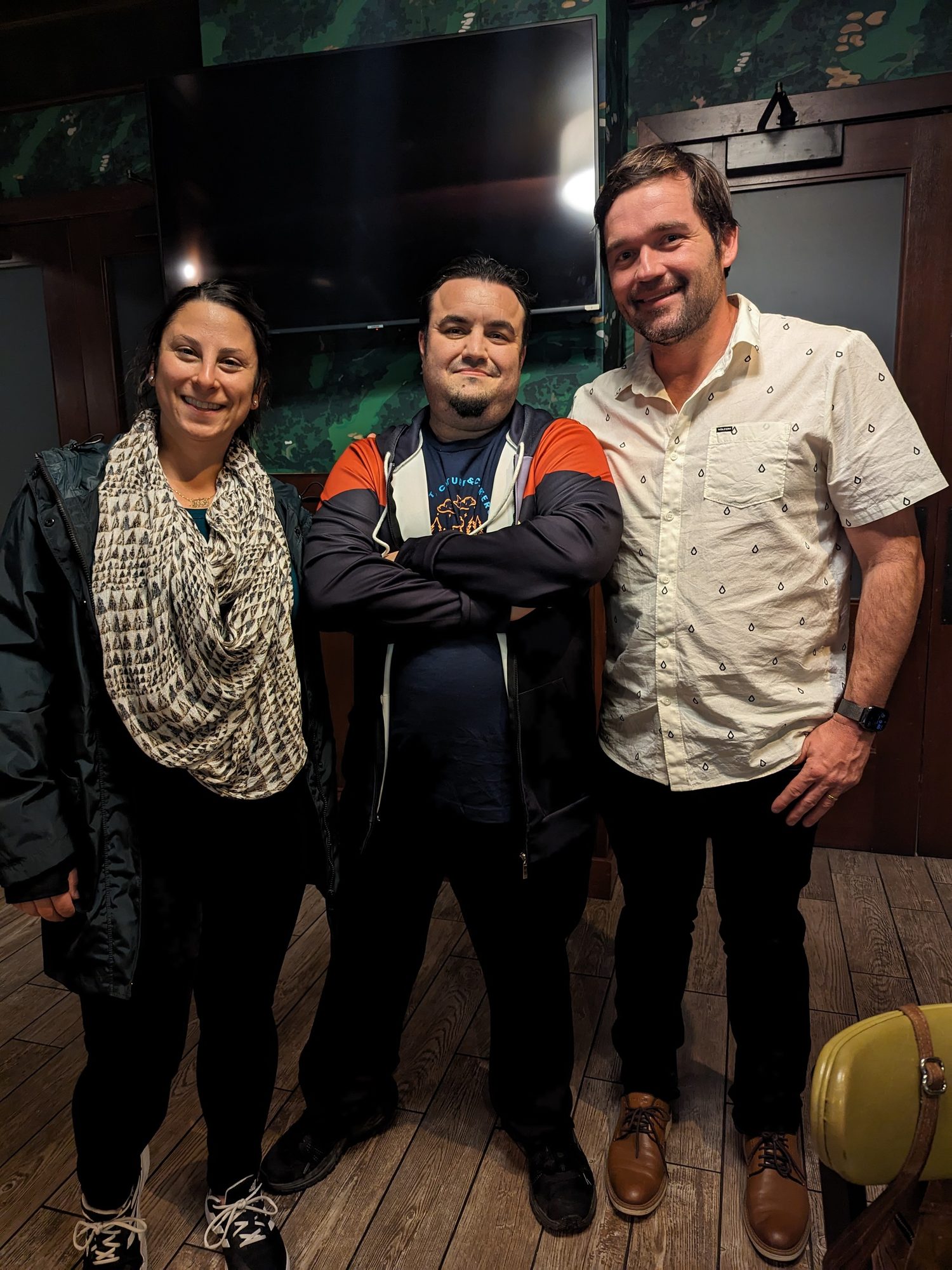
At Camp Bread I met Jon and Amanda of Proof Bread, in Mesa, Arizona. They ran a bakery out of a garage and filmed the whole thing, and their YouTube channel is the single most direct reason Powell Artisan Bakery exists.

They filmed the ordinary running of a bakery, the hard parts included, and it turns out that watching someone actually do it is what makes you think you could.

Allen standing between Amanda and Jon of Proof Bread
Amanda and Jon of Proof Bread, and one very pleased Ohio baker.

Still experimenting

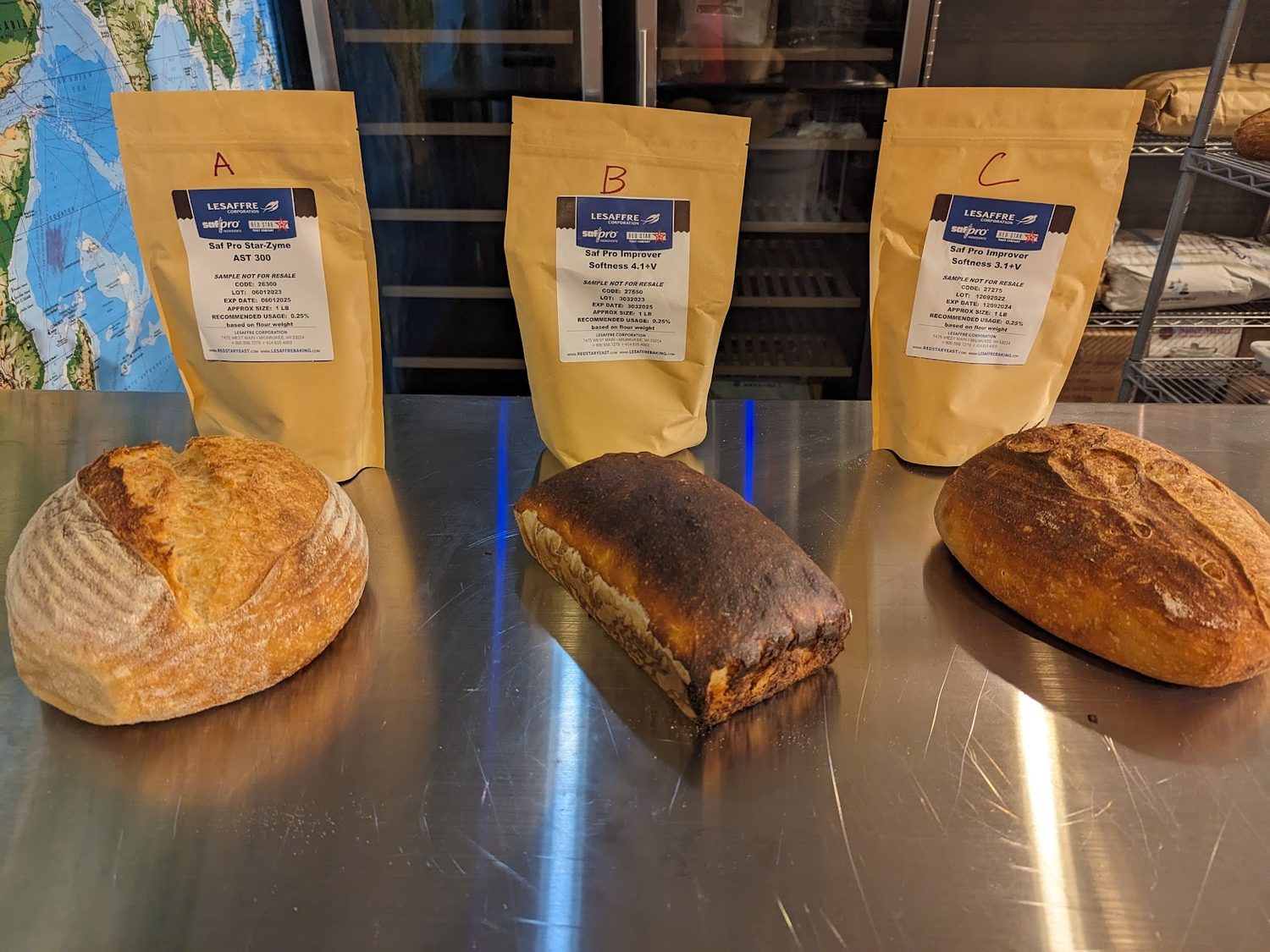
Fourteen years of qualifying hardware leaves a mark. One variable at a time, and write down what happened.

Three loaves labelled A, B and C in front of three sample bags of commercial dough enzymes
A, B and C. Three commercial dough enzymes, one variable, three loaves.
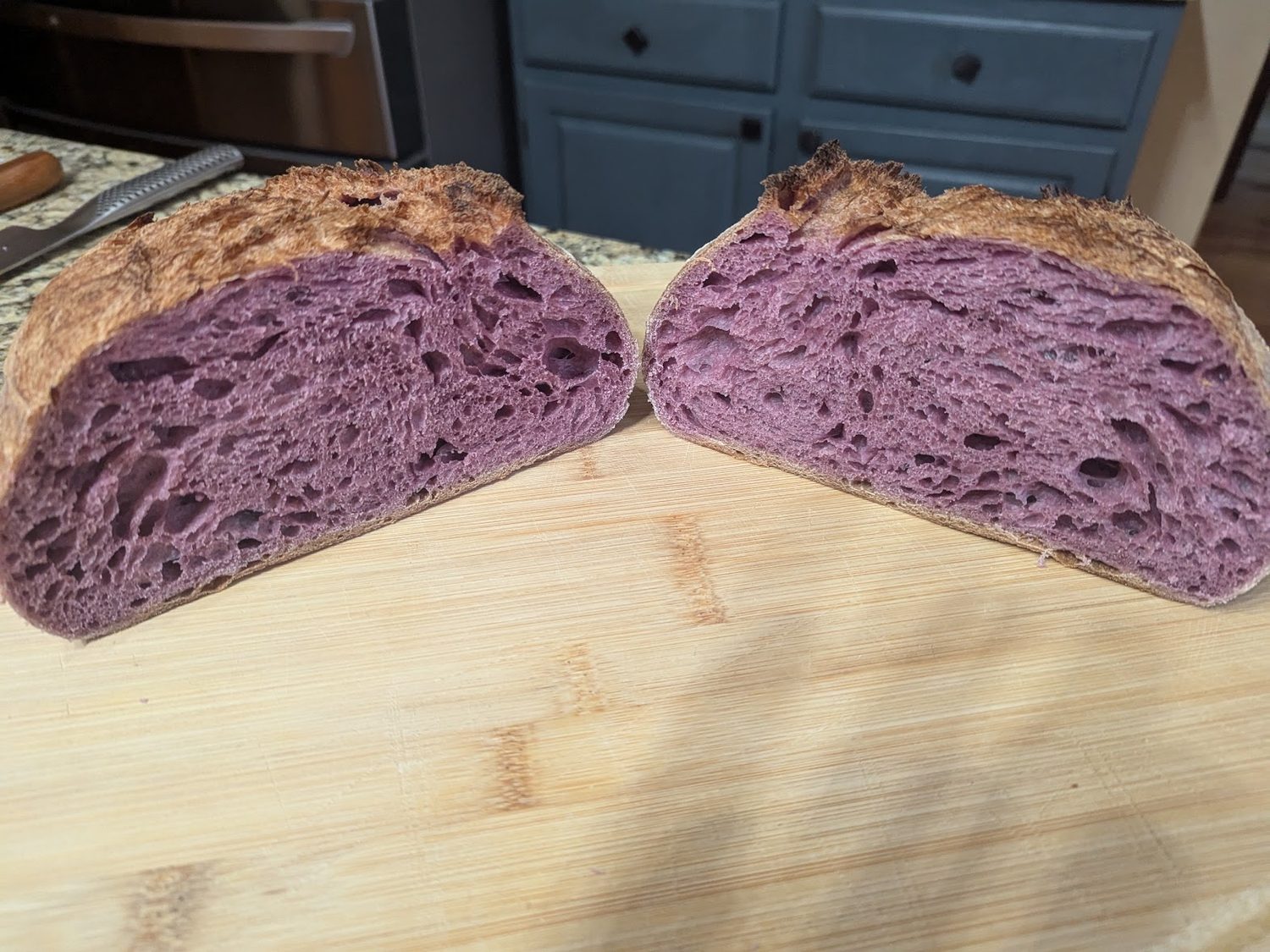
A sourdough loaf cut in half showing a deep purple crumb with an open irregular structure
Japanese sweet potato. That colour is the vegetable, not a dye.
Allen holding the Powell Artisan Bakery sign beside his son, who is wearing a chef's hat and holding a bagged loaf
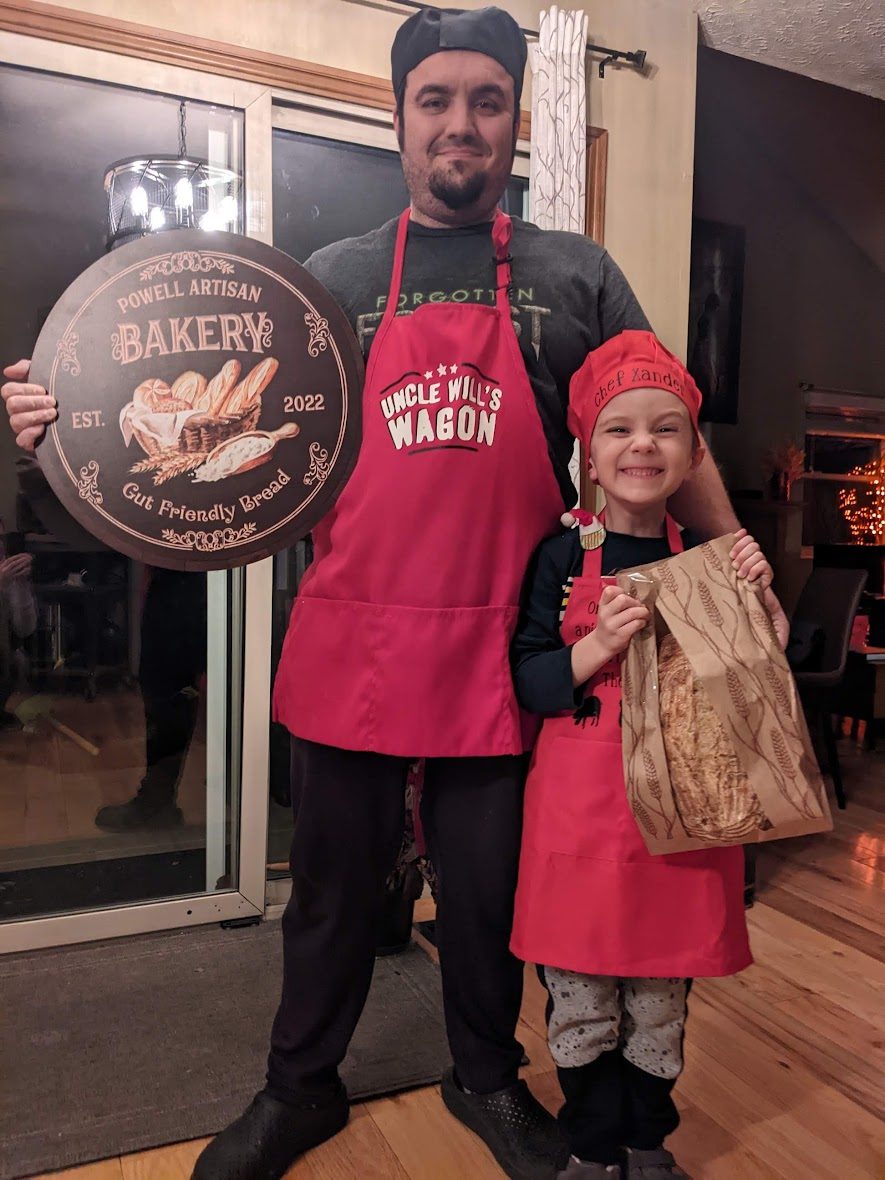
The bakery sign, est. 2022, and the assistant baker.

Other people's kitchens

For almost two years our bread went to Nocterra Brewing's downtown Columbus restaurant, where the kitchen built it into dishes across the menu rather than leaving it in a basket on the side.

And when Chouette opened downtown, we supplied their bread for the first few months, until they had their own bread program running.

It was great to be part of the story of restaurants working at that level.

Rachel

A year and a half ago I went back to work managing Google datacenters here in Ohio, and the honest answer to how the bakery kept running is that Rachel took it over.

She has done much of the baking since. Anyone who has bought a loaf from us in the last eighteen months has almost certainly been eating hers, and it is her name that should be on this paragraph rather than buried in a thank-you at the bottom of the page.

Rachel and Allen in the kitchen, a finished loaf cooling on a rack beside them
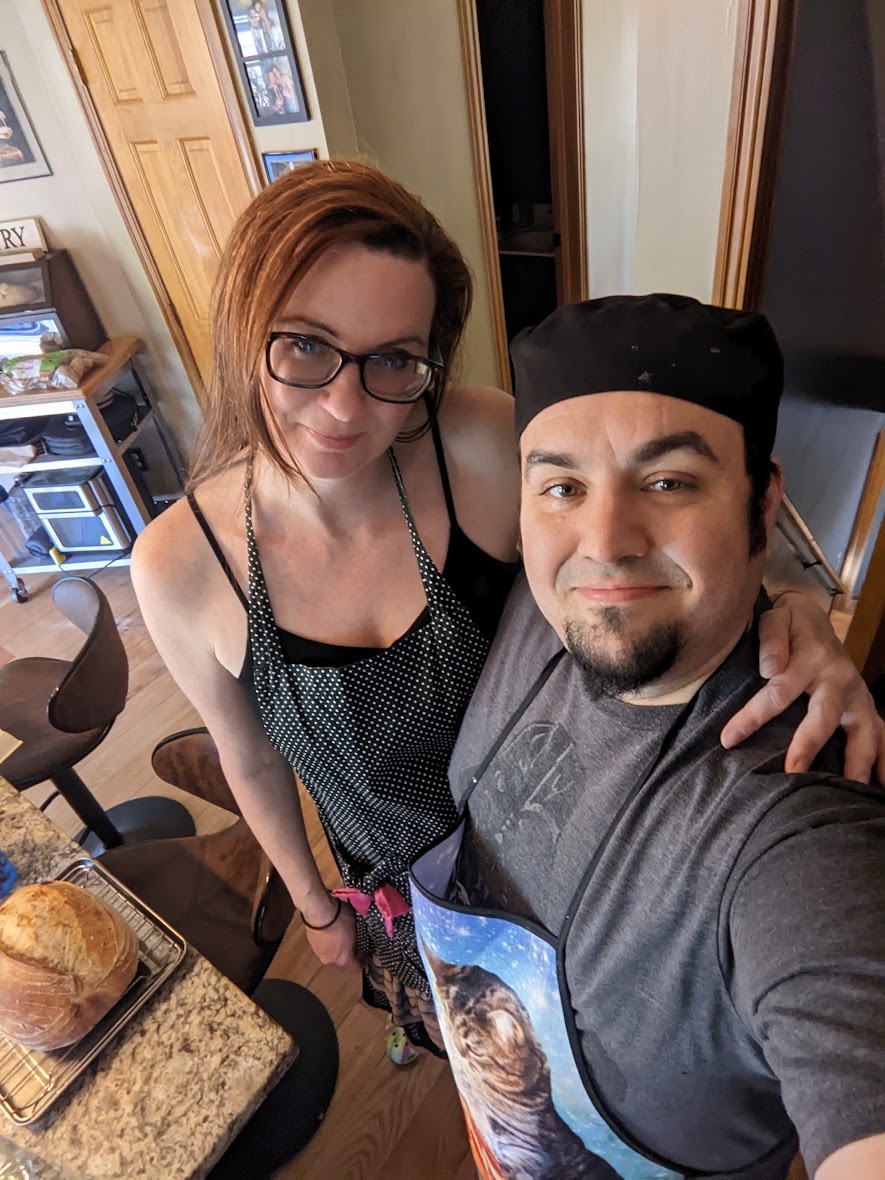
Rachel and me, and a loaf that is more likely hers than mine.

What is real bread, and why should you care?

Adapted from the Powell Artisan Bakery blog, February 2023.

There is a real bread movement, made up of bakeries trying to raise the quality of what they sell rather than the volume. It comes down to about six things.

Why it matters

Bread has fed people since the beginning of civilization, and before industrialization all bread was real bread. Then each pillar came down in turn, and every one of them came down for the same reason: it raised yield.

Shortening fermentation speeds up an assembly line.
The cost: less flavour, and less digestible bread. Plenty of people who report gluten trouble can eat a long-fermented loaf without any.
Lab-isolated yeast makes an industrial product consistent.
The cost: wild yeast and lactic acid bacteria give you flavour and shelf life, with no additives and no preservatives.
White flour keeps for years and ships anywhere.
The cost: the germ is perishable, and the germ is where most of the flavour and nutrition live. The bran is the fibre.
Out-of-state industrial wheat is cheap.
The cost: the money leaves your community. When a baker can call the miller and the miller can call the farmer, the grain gets tailored to the job.
Chemical treatment raises yield.
The cost: most US wheat is sprayed with glyphosate before harvest to make threshing easier, and measurable traces can end up in the flour.
Modern strains maximize yield and pest resistance.
The cost: they were not bred for taste. There are ancient, heirloom and modern varieties that make a better loaf.

So is technology bad for bread?

No. I do not think modern technology and technique are inherently bad for wheat, flour or bread. It is the choices we make about how to use the technology that decide the flavour and the health of what comes out.

That is the whole mission, and it is not only about bread. Use the machine where the machine genuinely helps. Refuse it where it would quietly take the good part away. Then close the circle back up: grower, miller, baker, community.

Craft is the work that fills your bucket. Toil is the work that empties it. Bread is the clearest example I have found of a thing worth keeping on the craft side of that line.

Mixing is toil, and I will happily let a machine do it. Deciding how long to ferment, reading a dough with your hands, judging when a crust is done: that is craft, and handing it away would be giving up the only part that was ever the point. Bread is also, unreasonably, a calming thing to make.

The teachers

Nobody learns this alone. If you want to start, start with one of these.

The book that starts you

Jeff Hertzberg & Zoë François

The method that got me my first loaf worth eating. A slack dough, a bucket in the fridge, and no ceremony.

Artisan Bread in Five Minutes a Day →

The cast iron pot

Jim Lahey

The no-knead loaf that ran in the New York Times and put a dutch oven in every kitchen in America, mine included.

My Bread →

Met at the Google test kitchen

Chad Robertson

Tartine's country loaf. The single most photographed crumb structure of the last twenty years, and it deserves it.

Tartine Bread →

Met at the Google test kitchen

Josey Baker

Proof that a beginner with a real appetite for it can end up milling his own flour in San Francisco. Genuinely his name.

Josey Baker Bread →

Met at the Google test kitchen

Tony Gemignani

Twelve-time world pizza champion. The book is a doorstop and it will settle any argument you are having about dough.

The Pizza Bible →

Met in Atlantic City, twice

Peter Reinhart

The one that turned baking from a set of recipes into a set of reasons. Read the chapter on the twelve stages and everything else gets easier.

The Bread Baker's Apprentice → Whole Grain Breads →

My first lesson

Craig Ponsford

Gold medallist at the 1996 Coupe du Monde de la Boulangerie, the first American to win a category, and he won it for baguettes. He teaches the advanced classes in Petaluma.

Art of the Baguette →

Met at Camp Bread

Jon & Amanda, Proof Bread

A garage bakery in Mesa, filmed honestly, including the parts that went wrong. The reason there is a bakery in Powell.

Proof Bread on YouTube → proofbread.com →

Where the professionals are

Bread Bakers Guild of America

The Guild, and Camp Bread. If you are serious and you are self-taught, this is the doorway.

bbga.org →
Allen at the market stall behind a table holding both loaves of bread and stacked copies of his book The Price of Discovery
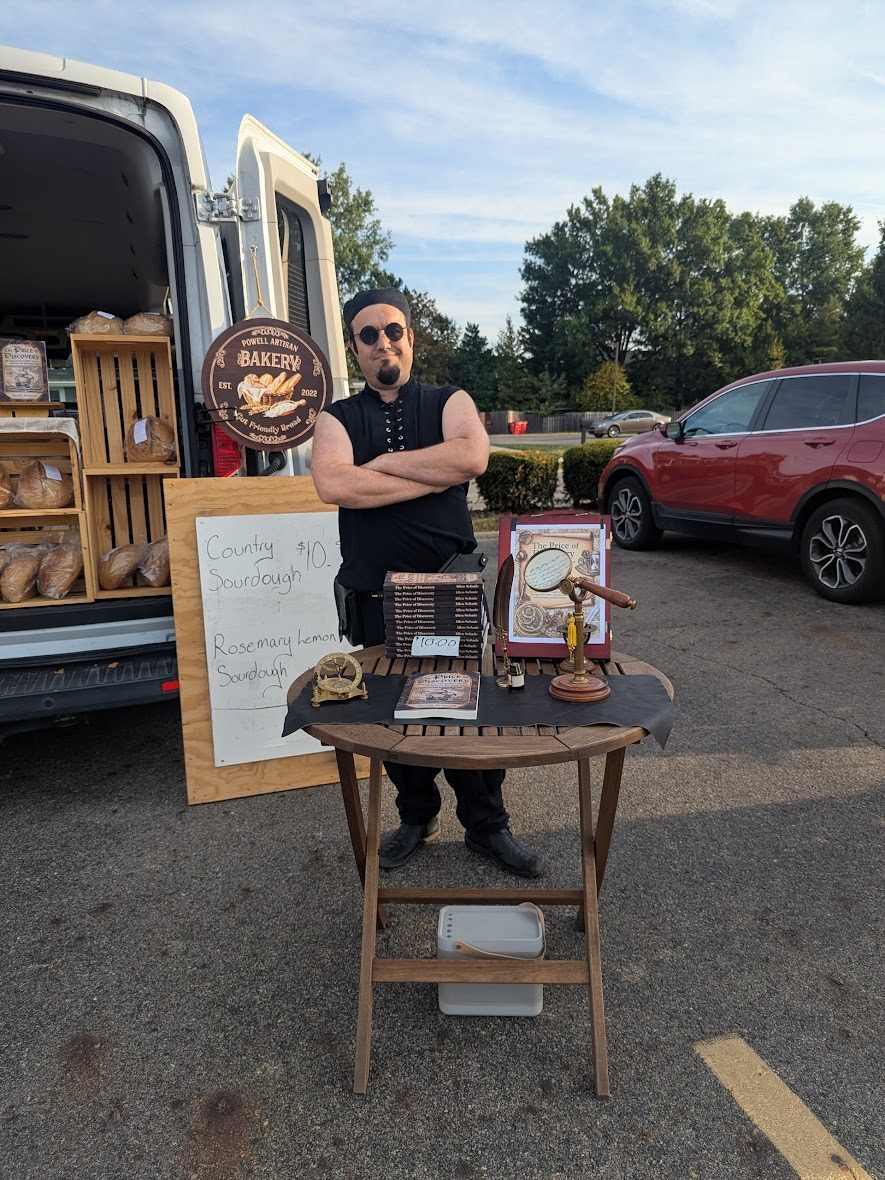
The bread and the books on the same table.